
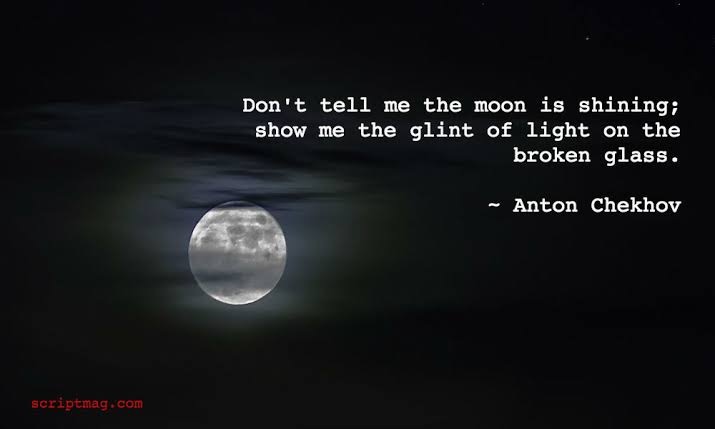
“Show, Don’t Tell”? What an utterly ruinous piece of advice. The problem isn’t in the “show” – we should be showing our readers all the things. Giving them a chance to experience things for themselves, letting them get inside the skin of our characters, encouraging them to feel the broken glass under their torn feet and smell the spicy food simmering on the grill.
No, the problem is in the “don’t tell.” Sonya Huber’s wonderful article “The Three Words that Almost Ruined Me as a Writer” reminds us of the problematic history of “don’t tell” – the secrets it hides, the abuse it encourages. The powerful ideas it stifles. The voices it hides.
“[Creative writing students may be] dog-paddling in private dunk-tanks of terror or depression, and they are trained already to anxiously do what they are told. They might only have stories of vague fog, the un-showable. They need to believe that interior monologue and private thoughts matter. That thinking differently, that considering, is as important as action.” (Huber, 2019).
The awful “show, don’t tell” advice means well. It’s designed to focus the writer on character rather than exposition and plot. It’s a staple of creative writing courses and late-night wine-soaked author discussions.
This advice comes from our writerly obsession with screenplays. We get our story beats from movies, we dart in and out of our narratives at will, showing and hiding. We write scenes rather than chapters. We discard the beautiful omniscient point of view and only show the things our protagonists can see. The spring melt of a giant waterfall, unobserved by any human, cannot be featured in our stories. If a tree falls in our story forests, and no one is around to hear it, we can’t tell you about it. The crash and echo is lost.
It’s time we put aside our obsessions with the screen and began re-engaging with the page. Broaden the scope of our story-telling. Pass comment, pass judgement. Resist any three-word slogan designed to narrow the scope of our craft. In the end it’s not enough to use our imperfect little mirrors to show people what’s happening, we must also tell them.
Your new entrant’s class had it right: “Show and Tell.” Bring something interesting along and tell us about it – and, in doing so, tell us about yourself and ourselves.
 insanemapboy
Leave a comment