
I’ve spent decades deliberately immersing myself in amazing art. Have I discovered the key, the single formula that turns a mediocre talent such as mine into a world-shaping artist?
No.
But I can see something over there, in the distance, just beyond the horizon. The knowledge of a state, a place I could be, maybe, one day – a place great artists occasionally reach and, very rarely, in which they learn to dwell. I can see it, dammit!
I think of it as the ‘flambouyant Elton John in the early 1970s’ place. Having absorbed all the standard musical influences, he tapped into something within, something of himself (probably his sexuality), struggled to bring it out, and produced music that became an identifiable sound, the cultural marker of that time and place. (I think he lost it when he settled on a formula.) Or the Aretha Franklin place. As far as I can tell, she got there young and never left it.
I can see the place but, as you can tell, I can’t really describe it. The nearest I’ve got is that it’s a place of letting go. Finding a space in your life where you discover a motivation for doing things that is not to ‘please others’.
It’s a place of letting go of others’ regard. This is so hard for me, a person who at heart lives for the regard of others. I want to be liked, I want to please, to be acclaimed, to make people happy. I suspect it’s really difficult to make something truly meaningful under such conditions. I haven’t managed it.
It’s hard to perform when you’re being watched.
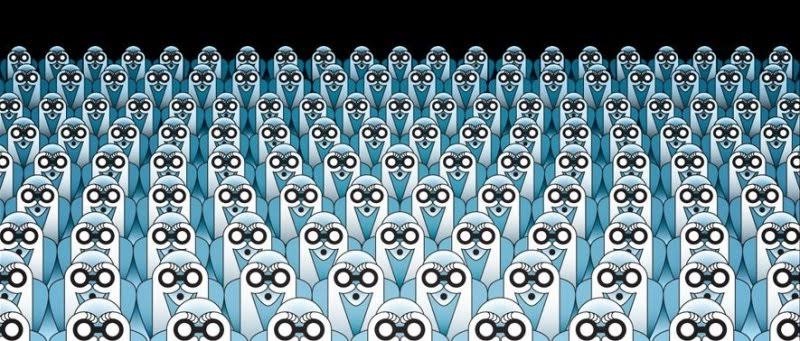
The place of letting go is a tricky place to find because, if you make anything for public consumption, at some level you must care about how people will react. I guess it’s a matter of degree.
Kylie says it’s akin to the notion of being cool. Being cool (she says) is not caring whether you’re cool or not.
Best I can do is tap into the raw power of others and, using my instructional voice, transmute it into something lesser, something Russell-flavoured. My work is more derivative than I’d like, and at every stage in the editing process it runs the risk of being further smoothed into something I think my target audience might want. I’m a consummate mimic, able to replicate the rhythms and feel of greater women and men.
Maybe I’m being too hard on myself. There was one point at which I genuinely created new art, art that helped shape New Zealand’s identity. You see, I found a substance that suspended my desire to please, my preoccupation with regulations, my fear of breaking the rules that turns my art (and most people’s art) into riskless, derivative mush. It’s a wonderful substance, dark and addictive. No, not drugs, though that’s worked for many artists. I’m talking about anger.
In 1991, while finishing my PhD, I was headhunted by the New Zealand government’s Department of Internal Affairs to work on a sesquicentennial historical atlas of New Zealand. This project was wonderful, my part marred by my struggles with organised religion and an awakening sense of social justice, but at the end we produced a superb atlas. My primary role was the creation of the first draft of the cartography, which the government’s cartographers fancied up. The system worked well. Then, at the very end, I got a phone call to tell me that the project still owed the government cartographers $30,000, and they had proposed a deal that the debt would be waived if my name and that of a cartographic co-collaborator were taken off the Atlas, allowing the government agency to take all the credit.
I doubt I’ve ever been as angry as I was that afternoon. I can still remember the feeling. It hurled me through the next two years of fourteen hour days, seven-day weeks, producing my own contemporary atlas to stand beside the historical atlas, to be a testament to the unique cartographic vision I felt had been stolen from me. My anger caused me to discard convention, to experiment, to embrace cartographic form and content never seen in a national atlas (and still never replicated). I succeeded. The atlas, first published in 1999, sold 50,000 copies, was a finalist in the Montana Book Awards and received strong critical reviews.
At this point I must put my hand up and admit that it took a toll. Anger is a demanding partner: he motivates, but he drives up your blood pressure and diminishes your ability to function as a rational adult. It’s a fool’s bargain, but it’s done now. I said what I wanted to say, and with that book reclaimed my cartography from the thieves working for the government.
I’m trying to find another road to that place of letting go. I care far too much about what people think, to the point I end up paralysed, unable to move forward with my writing. This latest novel has taken twelve years and only occasionally have I been able to find the creative place. Sure, I can sit down and write, but there in my head is the voice I dread. You can’t say that. No-one will publish that. Stick to the rules, follow the formula.
I have a novel I want to write. It has a powerful message, a message that will make an important contribution to New Zealand and beyond. I’m the only one who can write it. It’s been in my head for twenty-five years. I can see it. But as yet I haven’t found the – something, courage? I don’t know – ability to let go and write the damn thing. I fear I will not do it justice. I need to stop being so nice, so rule-conforming, so socialised, carve out six months of bloody-minded selfishness and see what happens.
 insanemapboy
Leave a comment