
What’s more important to producing art: the idea or its execution?
First, I don’t think it’s the sort of question that has a definitive answer. Nor do I think the answer matters, but the discussion does. I encountered this question most recently while talking to university students tasked with making creative responses to a gender and sexuality unit. They have to produce art (story, podcast, video, painting, whatever) based on one aspect of the unit, something that stimulated their imagination via fear, horror or disgust, something confrontational or affirming or joyous. A few students are struggling to come to terms with the exercise. They want clarity, given it’s worth 40% of their grade.
Well, I tell them, there’s a limit to the clarity I can give them. There’s no wrong answer to art, nor is there a right answer. There’s only the idea and its execution. The idea: that leap of the imagination sharpening an aspect of the background noise of our life into something that slashes at us, drawing blood. If the unit is about global environmental futures and you’re from rural Australia, concerned about how food stocks are going to diminish over the next generation, how do you bring that to our attention? Gather ingredients you imagine will still be available in 2050 and cook a meal. BAM. Art.
Does it matter how well the meal is cooked? I don’t think so. In this example the idea is everything.
I’m reminded of the National Contemporary Art Award held annually in Hamilton, New Zealand. In 2009 the winning entrant – wait for it – was called Collateral, and consisted of a small list of instructions from an artist based in Berlin asking the museum staff to assemble the discarded wrappings from the other entries. You can read about it here: http://www.stuff.co.nz/entertainment/2857424/Artist-defends-his-award-winning-rubbish
“The form was very secondary to the idea,” he said. No kidding.
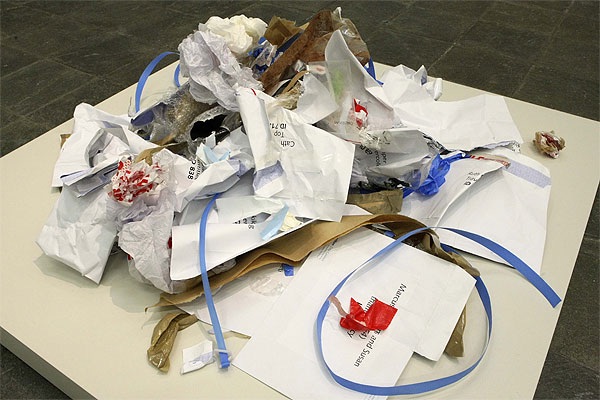
Of course, for every powerful idea without execution, there are a hundred art ideas with painstaking effort put into their realisation. And sometimes the detail in the execution obscures the idea.
The balance is somewhat different with a movie or a novel. The idea is akin to the log line or the elevator pitch, that sentence-long summary that showcases the idea underpinning your complex work. “The world’s so unstable geographers are like weather forecasters, predicting where the continents will be next week” (my original elevator pitch for the upcoming Silent Sorrow).
But that’s the easy part. Then it’s months or years in the execution, sweating over detail, making that idea come alive on the page or screen. The execution matters. However, I’ve noticed a shift in the last ten years in favour of the idea, as novel publishers react to the new, diverse voices entering the market with sharp, fresh ideas. That doesn’t mean standards of execution have declined! In fact, the quest for diversity and those tangy new ideas have lifted genre standards immensely. If you don’t have that BAM! idea, you’re going to struggle no matter how well executed your derivative work.
Your idea doesn’t have to be original, but I reckon it helps. It helps a lot. Of course, if you want a wider audience you need to put effort into the execution. Which is more important? Both.
 insanemapboy
Leave a comment